
Emergency Preparedness in Assisted Living: Safety Plans That Protect Everyone
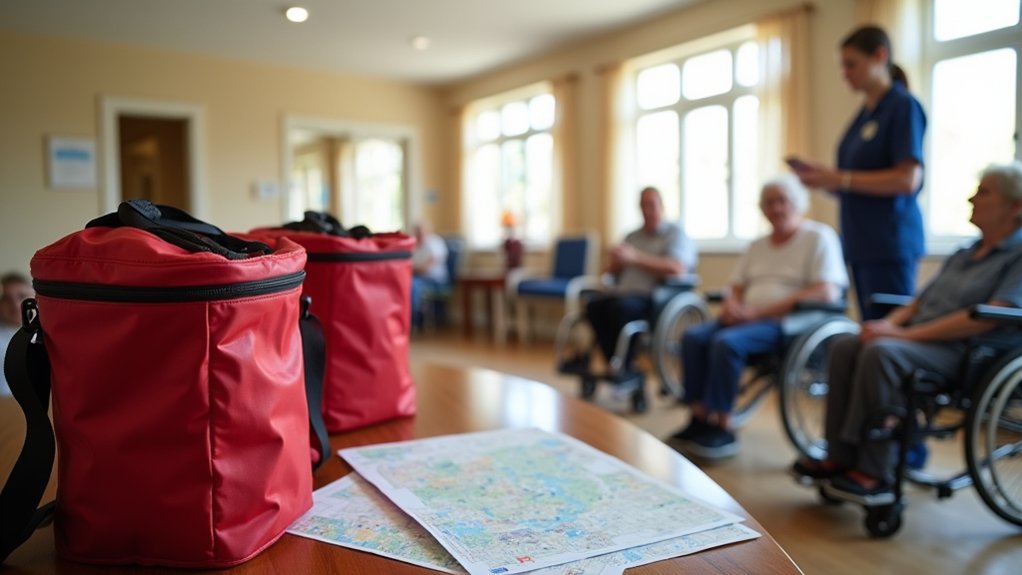
When planning emergency preparedness in assisted living, you’ve got to focus on safety plans that protect everyone. Understand residents’ unique needs, like mobility or health challenges, and create clear evacuation routes with accessible equipment. Train staff for crisis management with drills and first aid. Set up reliable communication systems and keep essential supplies ready. Trust us, sticking with this approach guarantees you’re prepared for any situation, and there’s plenty more to uncover ahead.
Key Takeaways
- Develop tailored evacuation plans addressing residents’ mobility and health needs for safe exits.
- Train staff regularly in crisis management, first aid, and CPR for effective emergency response.
- Maintain reliable communication systems like radios and alerts to coordinate during crises.
- Stock essential supplies, including food, water, and medications, for at least 72 hours.
- Collaborate with local emergency services to enhance safety plans and training.
Understanding the Unique Needs of Assisted Living Residents
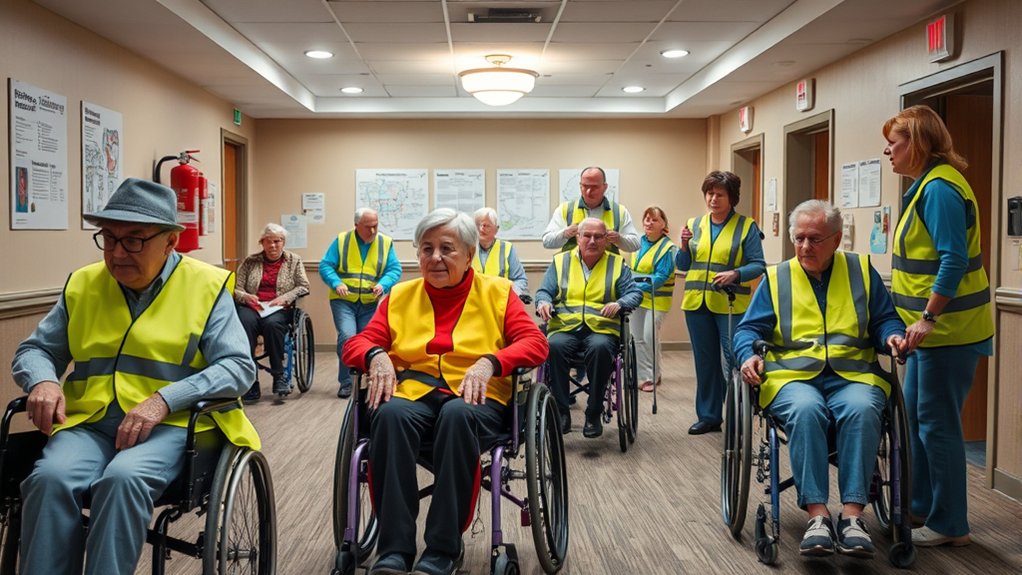
Vulnerability often defines the lives of assisted living residents, who may face mobility challenges, chronic health conditions, or cognitive impairments. As someone dedicated to serving others, you’ve gotta recognize these unique needs to guarantee their safety in emergencies.
Notice how some residents struggle with walking or hearing, while others might forget critical instructions under stress. Your role is crucial—pay attention to each person’s specific limitations and strengths.
Observe residents’ challenges with mobility or memory during stress. Your vital role is to understand their unique limitations and strengths for safety.
Take time to learn their medical histories and daily routines. Build trust by listening to their concerns and involving them in safety discussions when possible. The commitment to high-quality care ensures that residents receive the attention and support they need during emergencies.
You’re not just a caregiver; you’re their advocate. By understanding their needs, you’ll create a supportive environment where they feel secure, no matter the crisis.
Developing Comprehensive Evacuation Procedures
Building on the importance of knowing each resident’s unique needs, let’s focus on crafting solid evacuation procedures for assisted living facilities.
You’ve got to create a clear plan that accounts for everyone’s mobility and health challenges. Map out safe exit routes and designate assembly points outside the building. Make certain you’ve got accessible equipment, like wheelchairs or stretchers, ready for those who can’t walk.
Work with local emergency services to confirm your routes and get their input on logistics. Regularly update your evacuation plan to reflect any changes in resident needs or facility layout. Additionally, consider integrating technology tools for resident connectivity into your emergency protocols to ensure clear communication during an evacuation.
Test the plan with drills to identify gaps. Your dedication guarantees every resident’s safety, showing your commitment to protecting those in your care.
Training Staff for Crisis Management
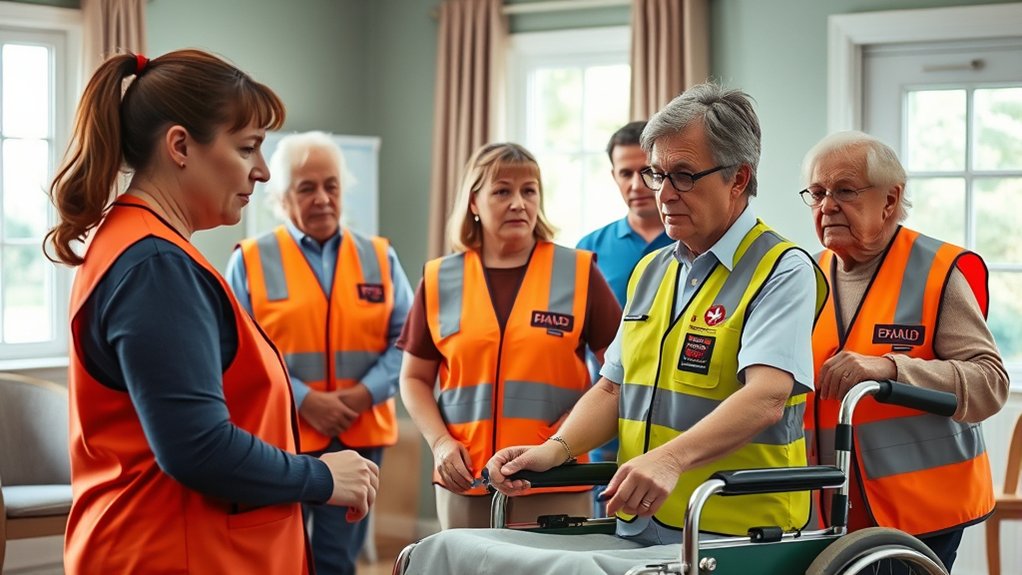
As we shift focus to crisis management, let’s prioritize training staff to handle emergencies with confidence.
You’ve got a heart for serving others, so equip your team with the skills to protect residents during a crisis. Organize regular drills for scenarios like fires or medical emergencies, ensuring everyone knows their role.
Teach quick decision-making and stress management to keep calm under pressure. Don’t skimp on first aid and CPR certifications—lives depend on it.
Prioritize quick decision-making and stress management to stay composed in emergencies. Ensure first aid and CPR certifications—lives are at stake.
Foster a culture of teamwork, so your staff supports each other when it counts. Review and update training often to address new challenges. Additionally, integrating knowledge of personalized care plans into emergency training can enhance staff preparedness and effectiveness.
Establishing Reliable Communication Systems
While emergencies can strike without warning, you’ve got to make certain your assisted living facility stays connected through reliable communication systems. As a caregiver dedicated to protecting others, make sure you’ve got multiple channels like two-way radios, cell phones, and intercoms ready to use when disaster hits.
Test these systems regularly to confirm they’re functioning, so you’re never caught off guard. Equip your team with clear protocols for who contacts whom during a crisis, making certain of quick coordination.
Don’t forget to include residents in the loop—use accessible tools like text alerts or visual signals for those with hearing challenges. By prioritizing seamless communication, you’re safeguarding vulnerable lives, fostering trust, and showing your unwavering commitment to everyone’s safety in tough times. Additionally, consider collaborating with local fire and police departments to enhance your safety seminars and training, ensuring everyone is prepared for emergencies.
Maintaining Essential Supplies and Resources

Let’s shift focus to keeping a solid stock of essential supplies and resources in your assisted living facility.
As a caregiver, you’re dedicated to the well-being of your residents, and preparedness is key. Stockpile enough food, water, and medical supplies to last at least 72 hours during an emergency.
Preparedness is vital for caregivers. Ensure your facility has food, water, and medical supplies to sustain residents for at least 72 hours in emergencies.
Don’t forget medications—ensure you’ve got a system to track and replenish them regularly.
Also, keep flashlights, batteries, blankets, and hygiene products on hand to meet immediate needs.
Store these items in accessible, secure locations, and check them quarterly for expiration or damage. Additionally, having outdoor spaces available can enhance the emotional well-being of residents during stressful times.
Frequently Asked Questions
How Are Family Members Involved in Emergency Planning?
When it comes to involving family members in emergency planning, you’ve got a crucial role to play.
Share your insights about your loved one’s needs and routines to help create a tailored plan. Attend meetings, ask questions, and offer to assist during drills.
Don’t hesitate to voice concerns or suggest improvements. By staying engaged, you’re ensuring safety and showing your commitment to protecting those who matter most to you.
What Role Do Residents Play in Safety Drills?
When it comes to safety drills, you’ve got an essential role to play. Actively participate by following instructions and practicing evacuation routes.
Don’t hesitate to ask questions or share concerns—it helps everyone improve. You’re contributing to a safer environment by staying engaged and alert.
Encourage others to join in, and remember, your involvement guarantees the well-being of those around you. Together, you’re building a stronger, more prepared community.
How Often Are Safety Plans Updated?
Hey, you’re probably wondering how often safety plans get updated.
It’s vital to stay on top of this to guarantee everyone’s well-being. Typically, you’ll see updates happening annually, but don’t hesitate to push for reviews after major incidents or changes in needs.
Get involved, ask questions, and offer input. Your dedication to serving others shines when you help keep these plans relevant and effective for all.
Keep caring!
Are There Specific Mental Health Support Plans?
Hey, you’re wondering if there are specific mental health support plans in place to help those you care for.
You’ll be glad to know that many facilities prioritize emotional well-being. You can find tailored strategies to address anxiety, trauma, or stress during crises.
Don’t hesitate to ask about counseling services or support groups. Check with staff to confirm these plans meet everyone’s needs, and keep advocating for compassionate care!
How Are Pets Accommodated During Emergencies?
Wondering how pets are accommodated during emergencies? You’ve got a big heart for ensuring everyone’s safety, including furry friends.
Make sure you check with facilities about pet-friendly evacuation plans. Prepare a pet emergency kit with food, water, and meds. Don’t forget identification tags and carriers for quick transport.
Advocate for pet inclusion in safety drills, so you’re ready to protect every member of your community when disaster strikes.