Cultivating Confidence: How Gardening Boosts Wellness in Senior Living
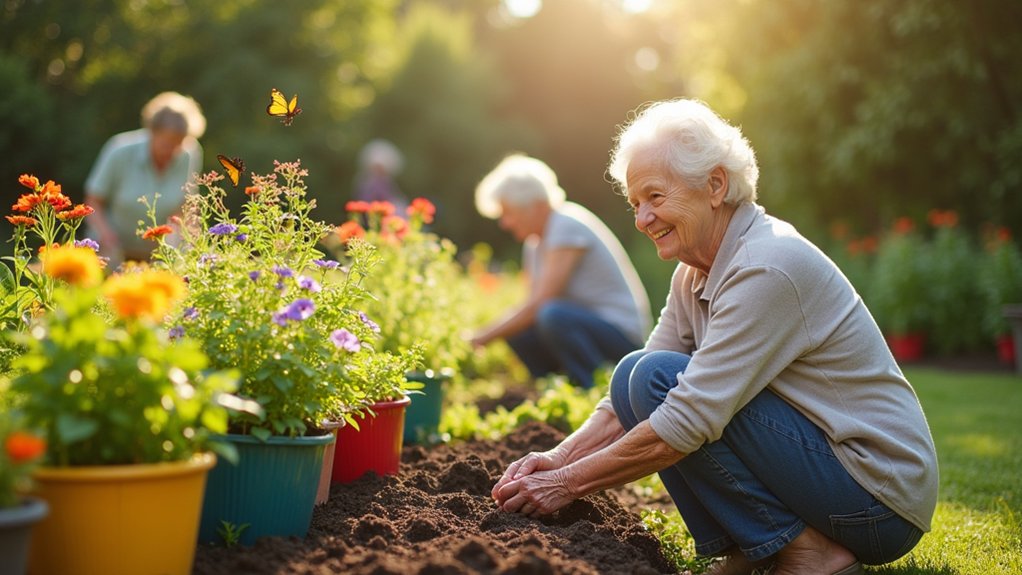
Gardening can greatly boost your wellness in senior living. It keeps you active, enhances your mental well-being, and fosters social connections. As you nurture plants, you cultivate a sense of purpose and accomplishment. The sensory experience of being in nature reduces stress and lifts your mood. Plus, gardening encourages friendships through shared activities. With adaptations for different abilities, everyone can participate. There’s so much more to explore about the profound benefits gardening offers.
Key Takeaways
- Gardening nurtures a sense of accomplishment, boosting self-esteem and confidence in seniors through the successful growth of plants.
- Engaging with nature reduces stress and anxiety, promoting overall mental well-being and a positive outlook on life.
- Physical activity from gardening enhances mobility and balance, contributing to improved physical health and vitality in senior living.
- Social interactions fostered by collaborative gardening activities strengthen community ties and enhance feelings of belonging and support.
- Accessible gardening options, like raised beds and ergonomic tools, empower seniors to participate fully and enjoy the therapeutic benefits of gardening.
The Therapeutic Benefits of Gardening for Seniors
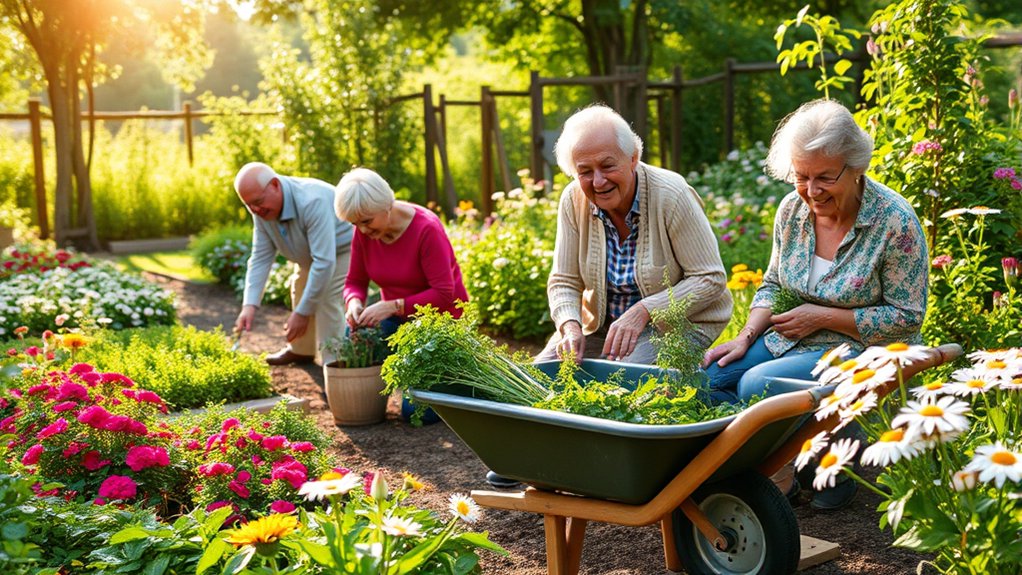
Gardening offers seniors more than just a way to beautify their surroundings; it provides therapeutic benefits that enhance both mental and physical well-being.
As you dig into the soil, you’ll find that nurturing plants can reduce stress and anxiety, giving you a sense of purpose. The act of caring for living things fosters a connection with nature, boosting your mood and overall outlook on life. Engaging in gardening also encourages creativity, allowing you to express yourself while cultivating beautiful blooms or fresh vegetables. Sharing your harvest with others not only brings joy but strengthens community ties. Additionally, spending time in the garden promotes light physical activity, which can enhance mobility and balance.
Embrace gardening as a fulfilling activity, knowing that each moment spent in the garden contributes to your emotional resilience and sense of belonging.
Physical Activity and Its Impact on Senior Health
Regular physical activity plays an essential role in maintaining senior health. Engaging in movement helps improve circulation, flexibility, and strength, which are crucial for daily activities.
By encouraging seniors to participate in gardening, you’re providing them with a fun way to stay active while enjoying nature. Digging, planting, and weeding can boost their heart rate and enhance muscle tone, all while they cultivate beautiful gardens.
This hands-on approach not only promotes physical fitness but also fosters a sense of accomplishment. Volunteering in retirement can also enhance social connections as seniors work together in community gardens, creating friendships and shared experiences. When you support seniors in their gardening endeavors, you’re helping them embrace a lifestyle that prioritizes movement and well-being, ultimately leading to improved overall health and happiness.
Enhancing Mental Well-being Through Nature
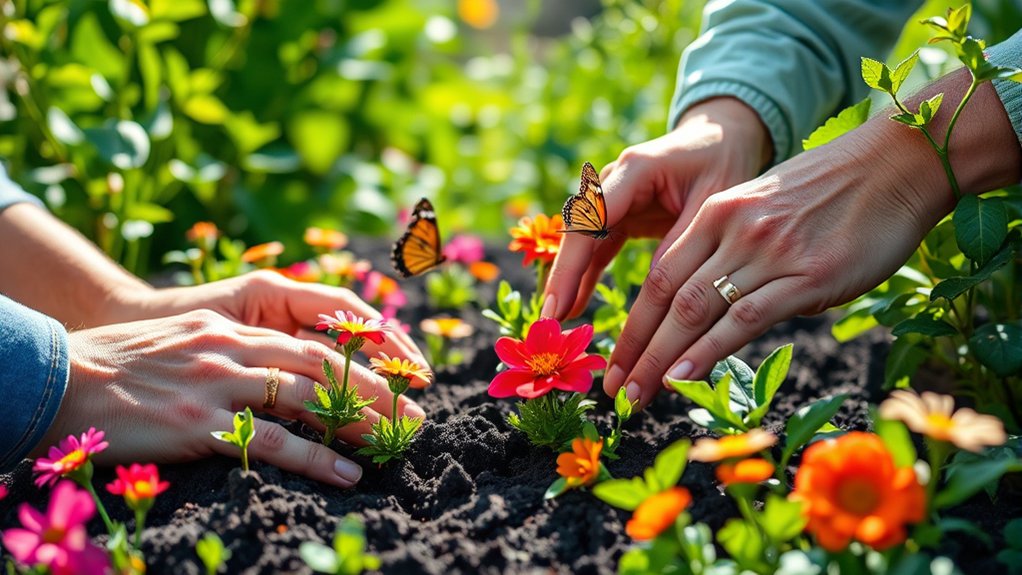
When you immerse yourself in nature, the benefits for mental well-being become evident.
Surrounded by greenery, you can experience reduced stress and anxiety, allowing your mind to find peace.
Gardening offers a sensory experience, engaging your sight, smell, and touch, which can uplift your mood and spark joy.
As you nurture plants, you’ll likely notice a sense of purpose blossoming within you, enhancing your self-esteem and fostering resilience.
The act of tending to a garden can also provide a welcomed distraction from daily worries, promoting mindfulness. Additionally, participating in wellness programs can further enhance the positive effects of gardening by promoting physical and mental health.
Building Social Connections in the Garden
Connecting with others often happens naturally in a garden setting. As you tend to plants, share tips, or exchange stories about your favorite flowers, those conversations can lead to meaningful relationships.
Gardening invites collaboration; you might find joy in planting together or organizing a garden club. These shared experiences foster camaraderie, creating a sense of community among residents.
You’ll discover that working side by side not only cultivates plants but also builds trust and friendship. Celebrating your successes, whether it’s a blooming flower or a bountiful harvest, strengthens those connections. Additionally, participating in intergenerational programs allows for enriching exchanges that enhance social bonds in the garden setting.
The Joy of Nurturing: Fostering a Sense of Accomplishment
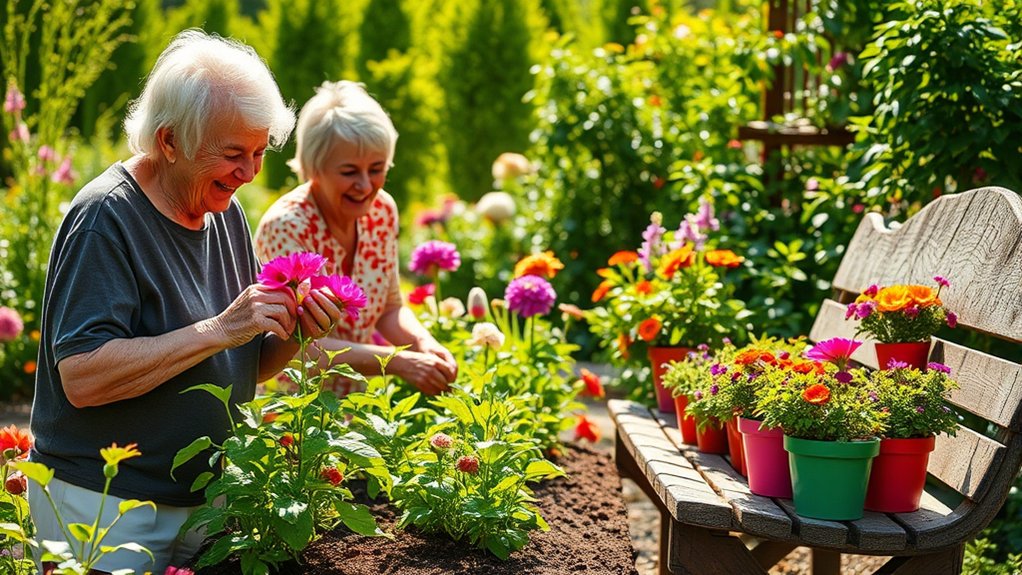
Nurturing plants not only brings joy but also offers a profound sense of accomplishment that can uplift your spirit.
As you tend to your garden, you witness the fruits of your labor, whether it’s vibrant flowers or fresh vegetables. Each new leaf or blossom serves as a reminder of your dedication and care.
This rewarding experience fosters a connection not only to nature but also to your own capabilities. When you see your plants thrive, it boosts your self-esteem and gives you a sense of purpose.
You’re not just growing plants; you’re cultivating resilience and hope. By nurturing your garden, you also nurture your heart, creating a positive impact that extends beyond yourself to those around you. Additionally, engaging in gardening activities can enhance social interaction and communication, promoting positive memories that enrich your overall well-being.
Adapting Gardening for Different Abilities
Gardening can be a fulfilling activity for everyone, regardless of physical ability or mobility. To make it accessible, consider raised garden beds, which reduce strain and allow easier access for those in wheelchairs or with limited mobility.
You can also incorporate container gardening, using pots that are lightweight and easy to manage. For individuals with dexterity challenges, tools with ergonomic handles can make planting and weeding more comfortable.
Additionally, you might explore sensory gardens featuring fragrant plants or textured leaves, creating an engaging experience for all. By adapting these elements, you guarantee that everyone can participate, fostering a sense of belonging and community while promoting wellness through the joy of gardening. Moreover, regular interactions in gardening activities can reduce feelings of isolation, further enhancing emotional well-being among participants.
Creating Community Gardens in Senior Living Spaces
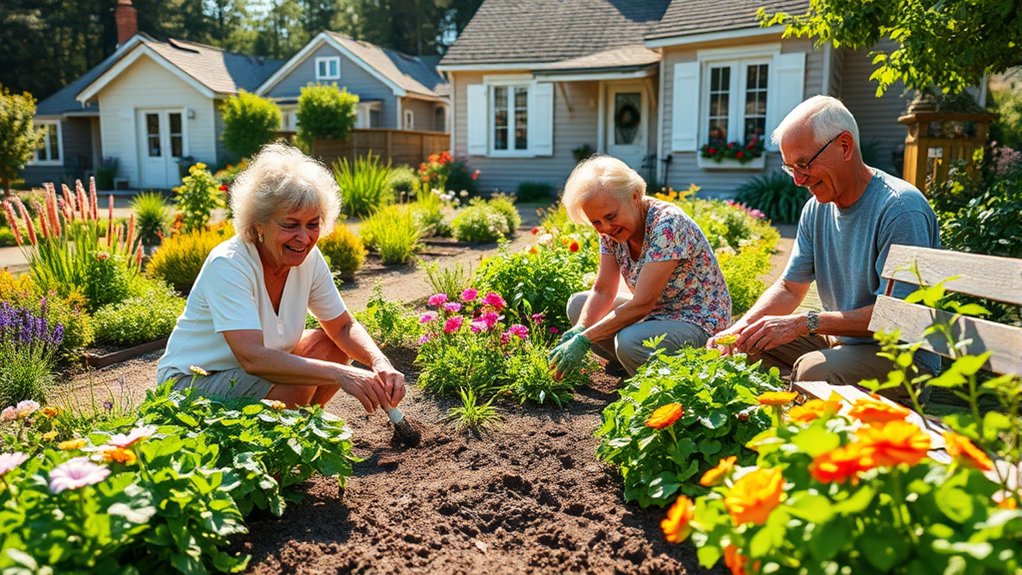
When creating community gardens in senior living spaces, you not only enhance the environment but also foster social connections among residents.
Start by involving everyone in the planning process—ask for input on plant choices and garden design. This collaboration helps residents feel valued and invested in their shared space.
Involving residents in planning fosters a sense of value and investment in their community garden.
Choose accessible features, like raised beds and wide paths, to guarantee everyone can participate, regardless of mobility.
Organize regular gardening events, allowing residents to bond over planting, watering, and harvesting.
Consider adding seating areas for relaxation and socializing.
By nurturing these green spaces, you cultivate not just plants, but friendships and community spirit. Additionally, celebrating milestone celebrations in the garden can provide residents with a unique setting to commemorate important moments together.
In the end, a thriving garden can become a cherished gathering place that enriches the lives of all who participate.
Frequently Asked Questions
What Types of Plants Are Best for Seniors to Grow?
When choosing plants for seniors to grow, consider low-maintenance options that thrive in various conditions.
Herbs like basil and parsley are great because they’re easy to care for and can be used in cooking. Succulents and pothos are also excellent choices, requiring minimal watering and attention.
Flowering plants like marigolds or zinnias add color without much fuss.
These selections can boost enjoyment and offer a fulfilling gardening experience for everyone involved.
How Can Gardening Be Adapted for Wheelchair Users?
You can adapt gardening for wheelchair users by creating raised beds or using container gardens at a suitable height.
Make certain pathways are wide enough for easy access and consider using lightweight tools.
Incorporating vertical gardening can also maximize space while keeping plants within reach.
Choose easy-to-manage plants that require minimal bending or stretching.
What Gardening Tools Are Easier for Seniors to Handle?
When choosing gardening tools for seniors, look for lightweight options with ergonomic designs.
Tools like long-handled pruners, raised garden beds, and trowels with cushioned grips help reduce strain.
You might also consider using tools with bright colors to make them easier to spot.
Adjustable kneelers can provide comfort while planting or weeding.
Are There Any Gardening Classes Specifically for Seniors?
Yes, there are gardening classes specifically designed for seniors!
These classes focus on techniques and tools that make gardening easier and more enjoyable. You’ll find local community centers, botanical gardens, and senior centers often offering sessions tailored to your needs.
Joining a class not only teaches you valuable skills but also connects you with others who share your interest in gardening.
How Can Seniors Start a Gardening Club in Their Community?
Starting a gardening club in your community is a rewarding way to connect with others.
Begin by gathering interested friends or neighbors and schedule a meeting to share ideas. Talk about what types of plants everyone wants to grow.
Find a suitable location, like a community garden or park, and establish a regular meeting time.
Don’t hesitate to reach out to local gardening experts for tips and support.
You’ll create a vibrant community space together!