The Art of Connection: Simple Ways to Build Friendships in Assisted Living
Building strong friendships in assisted living enhances your emotional well-being and reduces feelings of isolation. Start by creating cozy shared spaces where you can gather and chat. Organize fun group activities, like themed parties and games, to encourage interaction. Foster open communication and get to know your staff—they’re key to making connections. Celebrate special occasions together to strengthen bonds and create lasting memories. There are many more ways to foster friendships that you might find helpful.
Key Takeaways
- Create cozy communal spaces and organize regular activities to encourage spontaneous interactions among residents.
- Foster open communication through discussions and regular check-ins to enhance emotional bonds.
- Implement buddy systems that pair residents with similar interests to facilitate natural conversations.
- Celebrate special occasions together with themed parties and collaborative activities to strengthen community ties.
- Engage staff in meaningful conversations to build trust and enhance the overall living experience.
Understanding the Importance of Social Connections
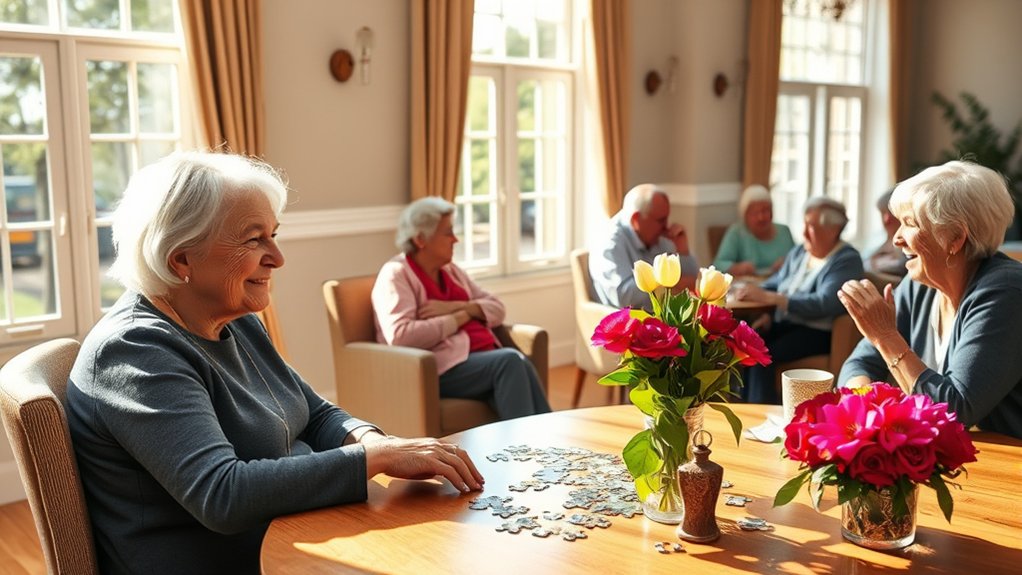
Building friendships can enhance residents’ emotional well-being and create a sense of belonging. When you encourage interactions among residents, you’re helping them find joy and support in shared experiences. Simple activities like group games or communal meals can spark conversations and laughter, making it easier for individuals to connect. By promoting these social ties, you’re not just improving their quality of life; you’re also creating a vibrant community where everyone feels valued. Additionally, a warm and welcoming atmosphere fosters community connection and support, enabling residents to bond and form lasting friendships.
Creating Shared Spaces for Interaction
To cultivate a vibrant community in assisted living, creating shared spaces for interaction is essential.
Consider designing cozy lounges or gardens where residents can gather, chat, and forge bonds. You might set up inviting seating arrangements that encourage conversation, making it easy for everyone to connect.
Design inviting lounges and gardens that encourage residents to gather, chat, and build meaningful connections.
Incorporating communal dining areas can also foster friendships over shared meals, where stories and laughter flow freely.
Think about adding activity corners with games or crafts, providing opportunities for spontaneous interactions.
Even simple touches like art displays or community bulletin boards can spark conversations and shared experiences. By hosting regular open houses and seasonal celebrations, you can invite the broader community to join in the fun and strengthen connections.
By prioritizing these shared spaces, you’ll help residents feel more connected, engaged, and supported in their new home.
Together, you can nurture a sense of belonging and camaraderie.
Organizing Group Activities and Events
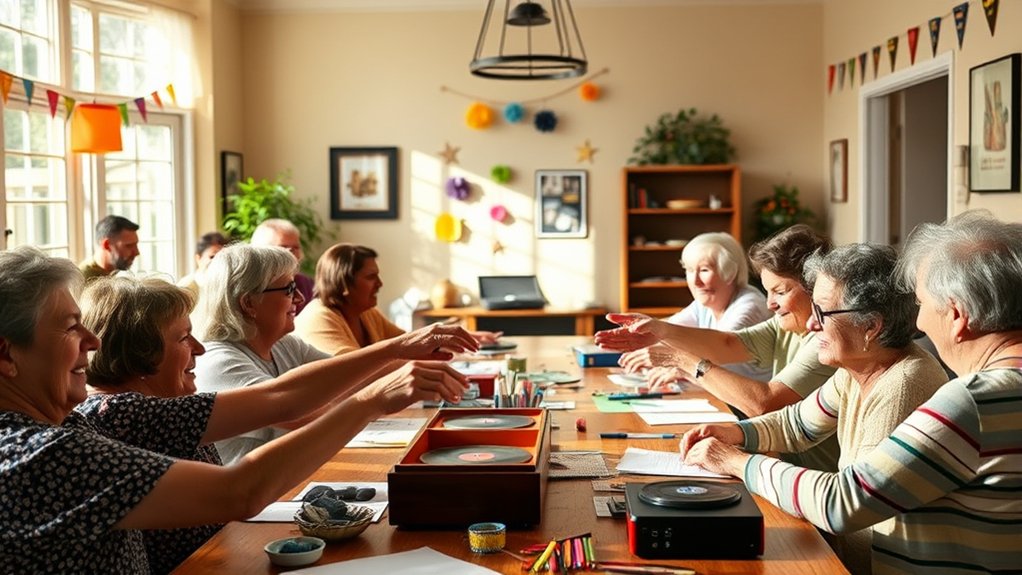
Organizing group activities and events can considerably enhance social connections among residents in assisted living. By planning regular gatherings, you create opportunities for residents to engage, laugh, and share experiences.
Consider hosting themed parties, game nights, or movie screenings that cater to diverse interests. You might also organize group outings to local attractions, nurturing both camaraderie and excitement. Celebrating milestone celebrations can further enrich these gatherings, making them more meaningful and memorable for everyone involved.
Involving residents in the planning process not only empowers them but also fosters a sense of ownership and belonging. Encourage volunteers to assist with setup, ensuring everyone feels included.
Encouraging Hobbies and Interests
After establishing a foundation of social connections through group activities, it’s important to encourage residents to explore their personal hobbies and interests.
You can create a welcoming environment by offering resources and support for various activities, whether it’s gardening, painting, or playing musical instruments.
Organize regular hobby showcases where residents can share their talents and passions, fostering a sense of pride and community.
Encourage small groups to engage in shared interests, allowing friendships to blossom naturally.
By promoting these pursuits, you’re not just enhancing individual enjoyment; you’re also strengthening bonds among residents. Outdoor experiences help create a serene backdrop for these activities, enhancing overall emotional well-being.
Take the time to listen and understand what sparks joy for each person, and help them connect with others who share those passions.
Fostering Open Communication Among Residents
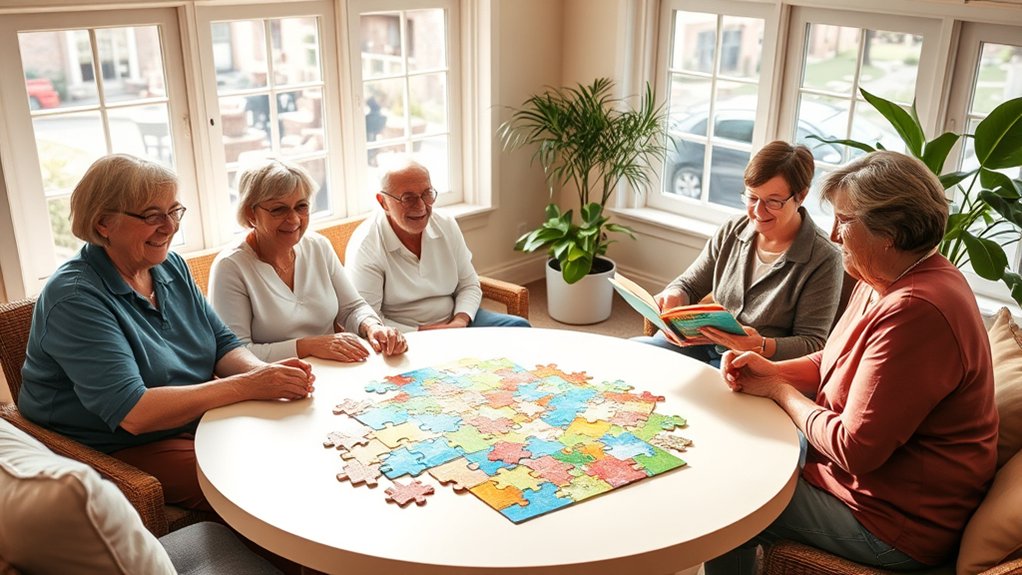
While fostering friendships among residents is essential, open communication serves as the bedrock for building those connections. Encourage everyone to share their thoughts and feelings openly, creating a welcoming atmosphere.
Simple gestures like maintaining eye contact and actively listening can make a significant difference. You might try facilitating small group discussions or one-on-one chats, helping residents express themselves freely.
Make it a point to check in regularly, asking about their day or interests. This not only shows you care but also inspires others to do the same. Additionally, creating opportunities for social activities can further enhance connections and engagement among residents.
Implementing Buddy Systems
One effective way to encourage friendships in assisted living is to implement buddy systems, pairing residents with one another based on shared interests or backgrounds.
By connecting individuals who’ve similar hobbies or experiences, you’ll foster natural conversations and create deeper bonds. Start by gathering information about each resident’s interests and preferences. Then, thoughtfully match them to enhance compatibility.
Encourage buddies to participate in activities together, whether it’s enjoying a game night, taking a walk, or simply sharing stories. Music can also serve as a powerful tool to trigger positive memories and enhance the bonding experience between buddies.
Regular check-ins can help guarantee the partnerships thrive and adjust if needed. This proactive approach not only builds friendships but also promotes a sense of belonging and support within the community, making everyone feel valued and connected.
Utilizing Technology for Connection

Technology can play an essential role in fostering connections among residents in assisted living. By embracing tools like video calls, social media, and messaging apps, you can help residents maintain friendships and create new ones.
Encourage them to explore online platforms that allow sharing stories, photos, and experiences. You might also set up group chats or virtual game nights, fostering a sense of community.
Teaching residents how to use tablets or smartphones can empower them to reach out, breaking the isolation that often accompanies assisted living. With your support, they can connect with peers and even engage with family members in meaningful ways. Moreover, regular interaction through technology can significantly reduce feelings of isolation and enhance emotional strength for residents.
Ultimately, technology can bridge gaps and enhance the warm connections that enrich everyone’s lives.
Encouraging Family Involvement
Family involvement is essential in creating a vibrant and supportive environment for residents in assisted living. Encourage families to visit regularly, as their presence can uplift spirits and foster connections.
Organize family engagement events where they can interact with residents, share stories, and participate in activities together. Simple gestures, like inviting families to join meal times or game nights, can strengthen bonds and create lasting memories.
Additionally, keep families informed about their loved ones’ well-being and encourage them to share updates and photos. This communication can deepen relationships and help families feel more connected. Engaging in volunteer opportunities can also foster social connections, allowing families to collaborate with residents on meaningful projects.
Celebrating Special Occasions Together
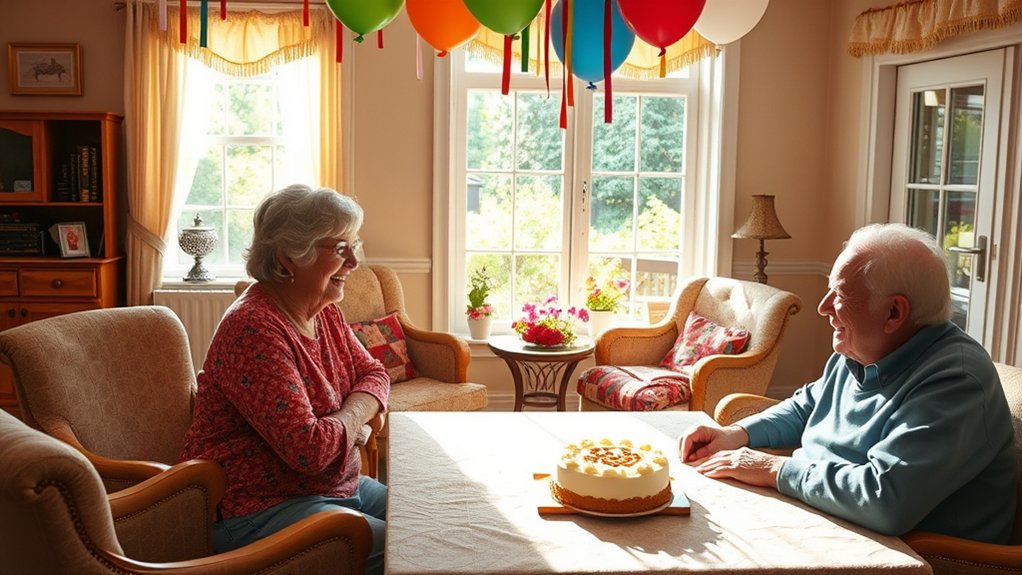
Creating a sense of community in assisted living goes beyond regular visits; it also involves celebrating special occasions together. Sharing birthdays, holidays, and milestone events fosters connections among residents.
Organize themed parties, potlucks, or game nights to encourage participation and interaction. You can invite residents to share their traditions or stories, creating a rich tapestry of experiences and memories.
Celebrating together not only brightens spirits but also strengthens bonds and builds trust. Whether it’s decorating for the holidays or baking treats, these collaborative efforts cultivate a sense of belonging. Additionally, engaging in activities designed for cognitive and social stimulation can enhance the joy of these celebrations.
Building Relationships With Staff and Caregivers
While building friendships among residents is essential, fostering strong relationships with staff and caregivers greatly enhances the overall experience in assisted living.
Take the time to get to know the staff by asking about their interests and sharing a bit about yourself. A simple “thank you” or a compliment on their hard work can go a long way.
Engage in conversations during meal times or activities, and don’t hesitate to express your needs and preferences—open communication builds trust.
You might even consider participating in staff-led events or brainstorming ways to improve community life. Additionally, participating in seasonal programs can create opportunities for bonding and shared experiences with both staff and fellow residents.
Frequently Asked Questions
How Can I Introduce Myself to New Residents?
When you meet new residents, start with a warm smile and a friendly greeting. Say your name, and maybe share a little about yourself to break the ice.
Ask open-ended questions to encourage conversation, like what they enjoy doing or their favorite memories. Showing genuine interest makes a big difference.
What if I’M Shy and Struggle to Make Friends?
If you’re shy and struggle to make friends, start small. You don’t have to plunge into deep conversations right away.
Try smiling at someone or making brief eye contact. Share a simple compliment or ask about their day. You’ll find that many people appreciate your effort, and it can open the door to friendship.
Are There Specific Games That Encourage Socialization?
Absolutely, there are plenty of games that encourage socialization!
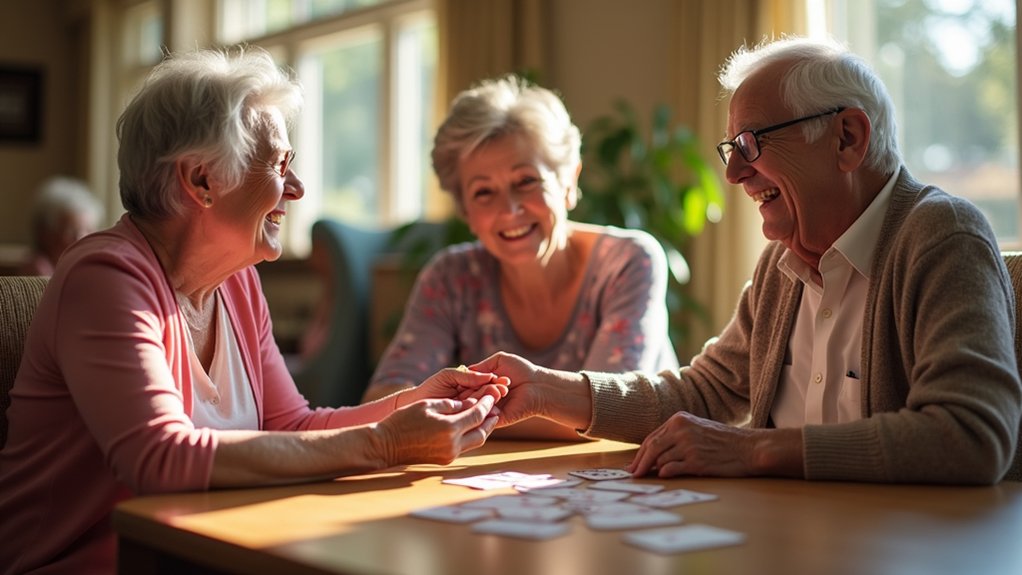
You might enjoy card games like Uno or board games like Scrabble, which spark conversation and friendly competition. Trivia games can also be a hit, as they encourage teamwork and sharing knowledge.
Don’t forget about group activities like charades or Pictionary, where laughter and teamwork can break the ice.
These games not only help you bond but also create lasting friendships in a fun way!
How Can Family Members Help With Building Friendships?
You can play an essential role in helping your loved one build friendships. Encourage them to join group activities or events, and even participate with them if possible.
Share stories about their interests to spark conversations with others. Regularly check in and invite their new friends for visits or outings.
Your support and encouragement will make them feel more comfortable and engaged, fostering connections that can lead to lasting friendships.
What Should I Do if Conflicts Arise Between Residents?
When conflicts arise between residents, it’s important to address them calmly and quickly.
Start by listening to both sides without taking sides. Encourage open communication, allowing each person to express their feelings.
Help them find common ground and suggest compromises. If necessary, involve a mediator to facilitate the conversation.
Remember, your goal is to foster understanding and maintain a positive environment for everyone.
Nurturing relationships can prevent future conflicts from escalating.